Complete Shubh Vivah Muhurat Calendar.
Selecting an auspicious wedding date is an important part of Hindu wedding planning. Traditionally, families consult the Hindu Panchang to identify a suitable Shubh Vivah Muhurat based on factors such as Tithi, Nakshatra, Yoga and Lagna.
For couples planning weddings in 2027 and 2028, identifying suitable dates early can also make it easier to shortlist wedding venues, coordinate guests and organise celebrations.
Important calendar note: Hindu marriage muhurats are not universally identical across India. They can vary according to regional Panchang calculations, geographical location, family traditions and the priest's interpretation. The dates below should therefore be treated as a planning reference, not a personalised religious determination.
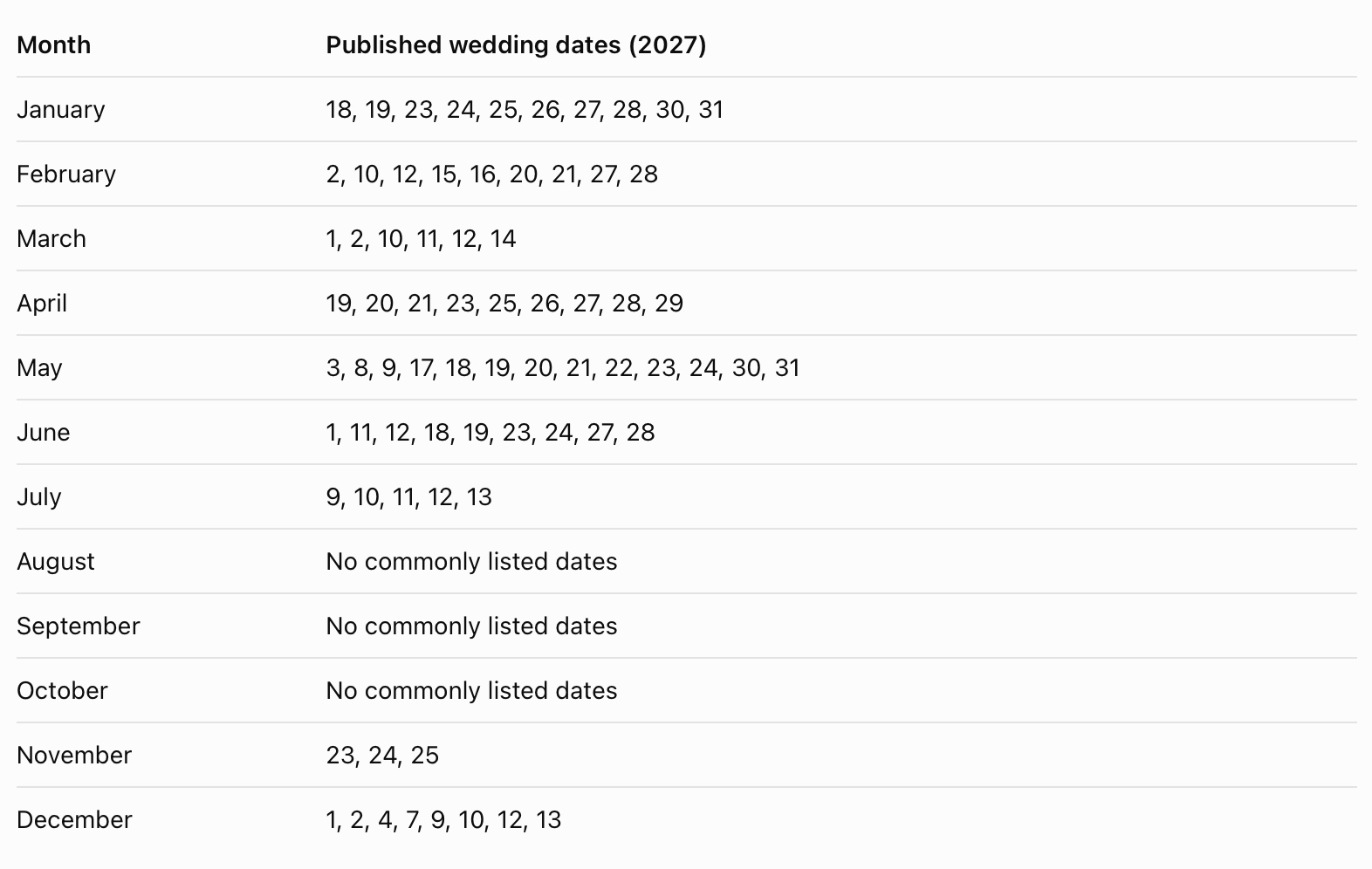
Auspicious Hindu marriage dates in 2027?
The Drik Panchang calendar for New Delhi identifies auspicious marriage windows using Panchang Shuddhi, including Nakshatra, Yoga, Karana and relevant solar and lunar month considerations. It also cautions that this is not the same as personalised Lagna Shuddhi.
Auspicious Hindu marriage dates in 2028?
The Drik Panchang page confirms, for example, 8 eligible days in January, 6 in March, 13 in May, 8 in June, 2 in October, 11 in November and 7 in December.
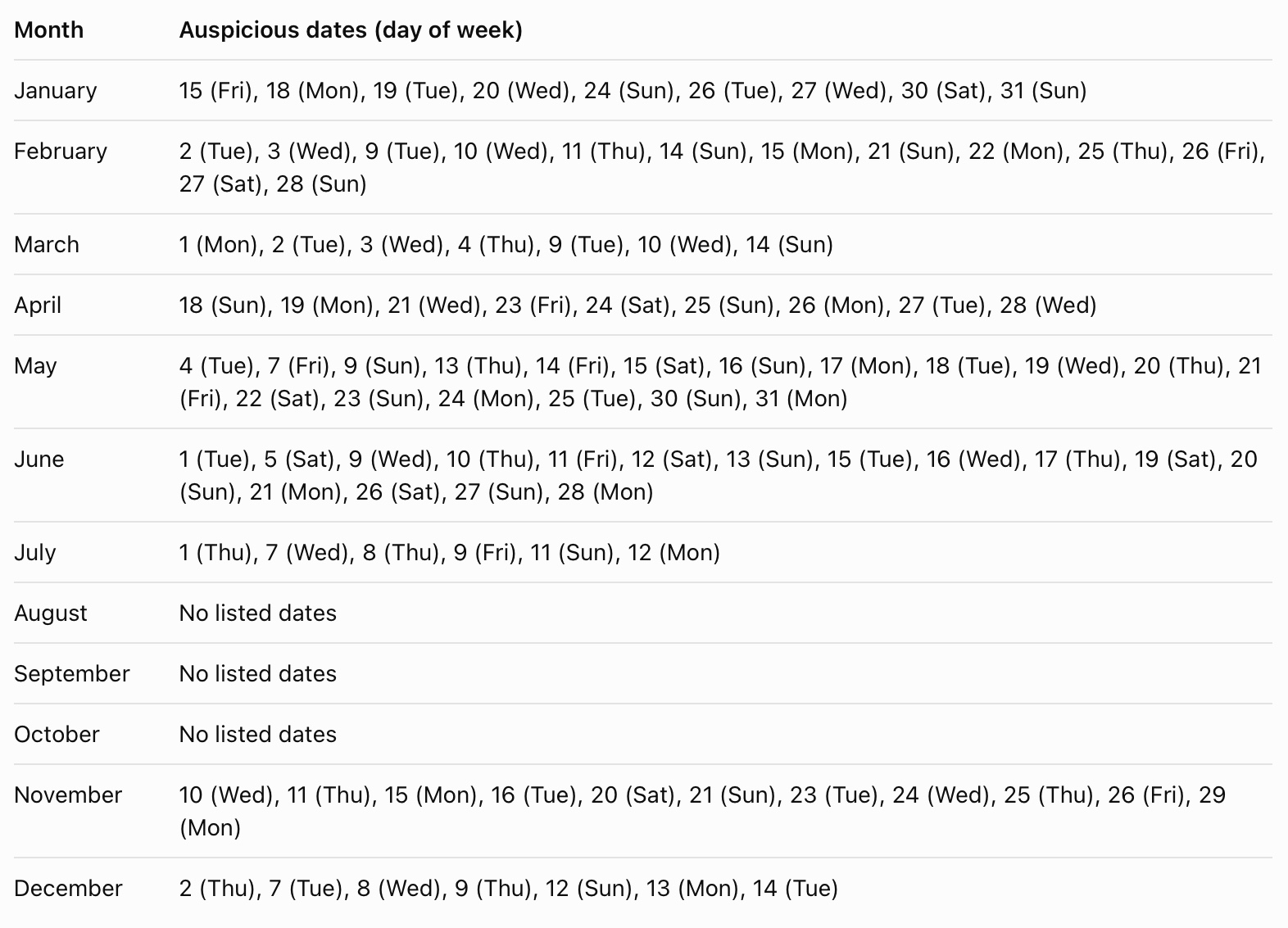
Best months for Hindu weddings in 2027 and 2028?
Based on the published date lists:
-
2027: May is a prominent wedding-planning month, followed by January, February and April.
-
2028: February has the highest number of listed dates, followed by May and November.
These are calendar-based comparisons, not recommendations that every date in those months is suitable for every couple.
Months when Hindu marriages are generally avoided?
Certain periods are traditionally considered unsuitable for Hindu marriage ceremonies in many communities. The restrictions are based on religious calendars and astrological traditions.
1. Chaturmas:
Chaturmas is a four-month sacred period associated with Lord Vishnu's cosmic rest. Many Hindu communities traditionally avoid conducting marriage ceremonies during this period.
2. Kharmas:
Kharmas is associated with the Sun's transit through Sagittarius and Pisces in certain Hindu astrological traditions. Many North Indian communities avoid auspicious ceremonies during these periods.
3. Pitru Paksha:
Pitru Paksha is a period dedicated to remembering and performing rituals for ancestors. Weddings and other major celebrations are generally avoided by many families during this period.
4. Guru Tara Asta and Shukra Tara Asta:
When Jupiter (Guru) or Venus (Shukra) is considered combust, some Hindu traditions avoid conducting marriages until the relevant planet becomes visible again.
These restrictions are not interpreted identically across all Hindu communities. The dates and applicable rules should be checked against the relevant regional Panchang.
What is Shubh Vivah Muhurat?
Shubh Vivah Muhurat refers to an astrologically selected auspicious time for conducting a Hindu marriage ceremony.
In Hindu traditions, marriage is considered an important samskara (sacred rite of passage). Selecting an appropriate muhurat is believed to establish a favourable beginning for the couple's married life.
The selection generally involves examining:
-
Tithi – the lunar day.
-
Nakshatra – the Moon's position in a lunar constellation.
-
Yoga – one of the 27 combinations calculated using the Sun's and Moon's longitudes.
-
Karana – half of a lunar Tithi.
-
Lagna – the ascendant or zodiac sign rising at the selected time.
-
Planetary positions – including the relevant considerations involving Jupiter and Venus.
The final muhurat may be adjusted according to the couple's birth details, regional customs and the location of the wedding.
How are Hindu marriage dates determined?
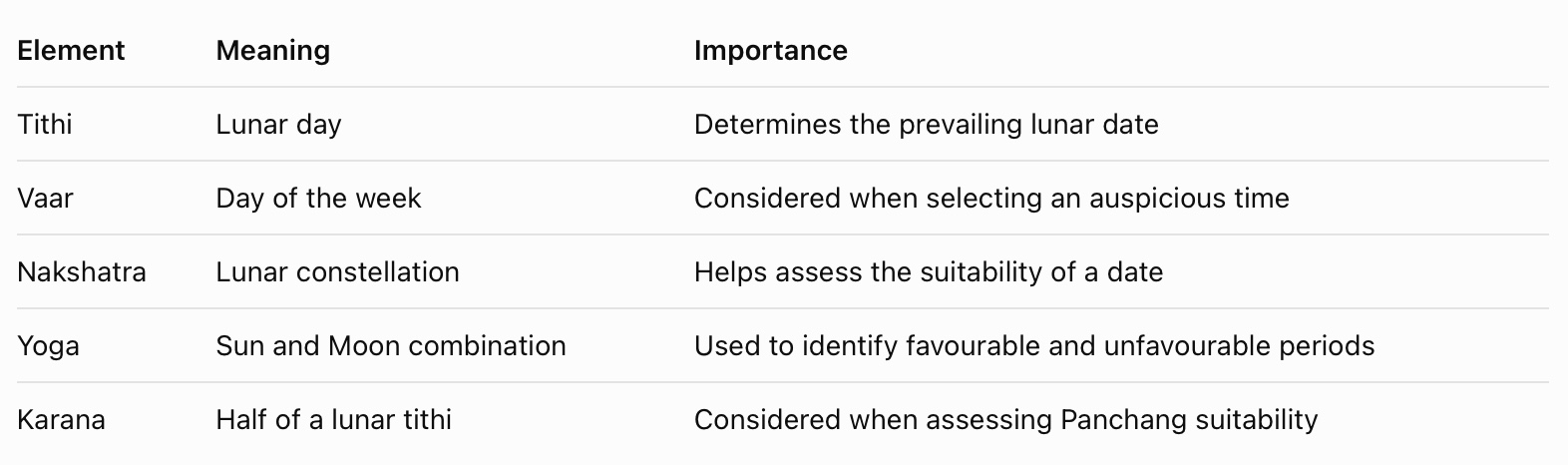
A published calendar can identify general auspicious windows, but it cannot automatically establish the most appropriate time for every couple.
Things to consider before finalising your wedding date?
Selecting an auspicious date is only one part of wedding planning. Couples should also consider practical arrangements.
1. Family and regional traditions
Discuss the proposed dates with both families. Different communities may follow different Panchang systems.
2. Consult a qualified priest
Confirm the Tithi, Nakshatra, Lagna and personalised muhurat before making a final commitment.
3. Check wedding venue availability.
Popular wedding destinations and premium hotels can receive bookings well in advance, particularly around peak wedding seasons. You can also go through our website venue.events for selecting your desired venue or contact us directly and let us do the job for you.
Consider flight availability, accommodation, transportation and the convenience of guests travelling from other cities or contact us directly and let us do the job for you.
5. Consider seasonal weather
Weather can significantly affect outdoor ceremonies, especially destination weddings in Rajasthan, Goa, Kerala and other popular locations.
Compare venue packages, accommodation, catering, decoration and other event-related expenses before finalising the date.
7. Book the venue early
Once the family has shortlisted suitable muhurats, begin exploring venue options. A date that works religiously and practically should be prioritised.
Frequently asked questions!
- Q1. Which are the best Hindu wedding dates in 2027?
The best dates depend on the regional Panchang and the couple's individual requirements. May, January, February and April feature several dates in some published calendars. Confirm the exact dates and timings before booking.
- Q2. Which are the best Hindu wedding dates in 2028?
February, May and November feature prominently in published 2028 wedding calendars. The Drik Panchang New Delhi calendar reports 14, 13 and 11 auspicious days respectively in these months.
- Q3. Which months are generally considered auspicious for Hindu marriages?
January, February, April, May, June, November and December often feature marriage muhurats, although the availability varies from year to year.
- Q4. Are Hindu weddings performed during Chaturmas?
Many Hindu communities traditionally avoid marriage ceremonies during Chaturmas. However, practices and exceptions can differ according to community traditions.
- Q5. What is the difference between Shubh Muhurat and Vivah Muhurat?
Shubh Muhurat refers broadly to an auspicious time for an activity. Vivah Muhurat specifically refers to an auspicious time selected for a Hindu marriage ceremony.
- Q6. Can Hindu weddings take place on Ekadashi?
There is no universal answer. Suitability depends on the relevant Panchang, regional customs and the priest's assessment. An Ekadashi date should not automatically be treated as suitable or unsuitable.
- Q7. Do marriage muhurats differ between North and South India?
Yes. Different regional Panchang systems, calendars and marriage traditions can produce different dates and timings. Tamil, Telugu, Kannada, Malayalam, Bengali and North Indian traditions may follow different calculations.
- Q8. How early should couples book their wedding venue?
For popular wedding dates and destination venues, starting the search 9–12 months ahead is a sensible planning approach. Premium properties and peak-season weekends may require even earlier enquiries.
Planning your wedding venue?
Once you have shortlisted an auspicious wedding date, the next step is finding a venue that matches your celebration, guest requirements and budget.
India offers a wide range of wedding venues, including:
If you are planning a wedding in 2027 or 2028, exploring venues early can help you compare locations, accommodation facilities and available event spaces.
Conclusion.
Choosing an auspicious Hindu marriage date is an important first step in planning a wedding. The 2027 and 2028 calendars provide an initial reference for couples and families looking to shortlist suitable dates.
However, the final wedding muhurat should always be confirmed with a knowledgeable priest using the appropriate regional Panchang and the couple's individual details.
Once the date is finalised, couples can begin planning their venue, accommodation, travel and celebrations well in advance.